Methodology AI Method Research For Teachers Projects Writing About Available for work Contact Glossary Free Resources Book a call — first session free
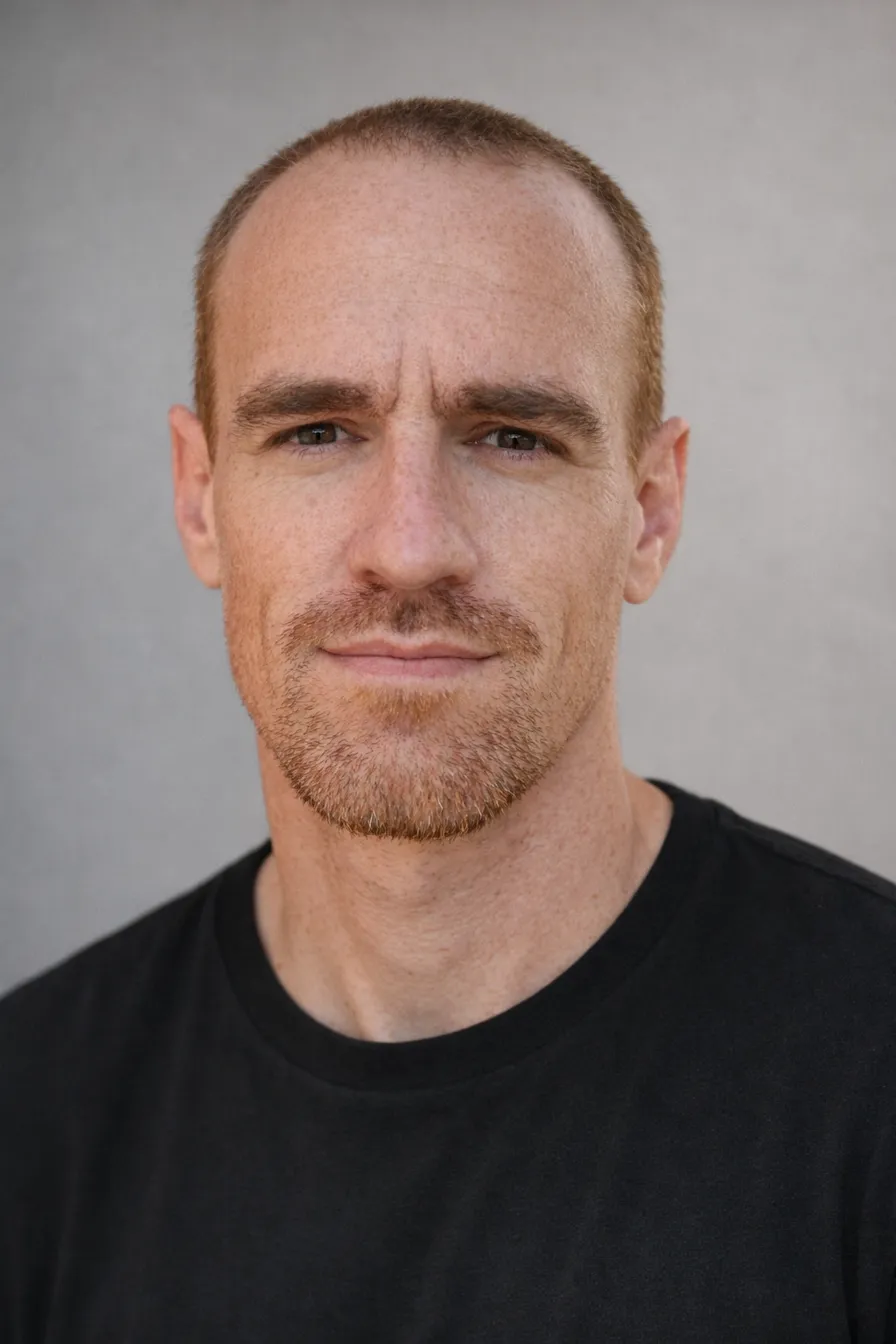
Gregory Lacefield math tutor Las Vegas
Las Vegas, NV · Math & GED Tutor
Students & teachers Researchers & collaborators

Self-taught.
Battle-tested.
Results proven.

I learned calculus, linear algebra, and differential equations alone, in a cell, with a pencil and a Dover textbook. No professor. No internet. No calculator. That is not a liability — it is the reason I can teach anyone anything.

No classroom. No
shortcuts. Just math.

I dropped out of high school and never set foot in a college classroom. What I have instead is something most credentialed educators cannot claim: I learned mathematics the hardest possible way, from first principles, entirely on my own, with nothing but time and the determination to understand — not just memorize.

Starting with Calculus I from a borrowed textbook, I worked forward through Calculus II, multivariable calculus, ordinary differential equations, linear algebra, statistics, and into abstract algebra — pausing to go back and fill gaps whenever the logic demanded it. I worked through Fraleigh's Abstract Algebra, Hildebrand's Numerical Analysis, Den Hartog's Mechanics, and university-level physics. Not cherry-picked. Cover to cover.

When I later took the GRE Math Subject Test — a exam designed for students finishing math undergraduate degrees, competing against seniors applying to PhD programs — I scored in the 35th–40th percentile cold, without review, years after last studying. That is not a credential. It is a data point that tells you where self-directed mastery lands against a formal university baseline.

7 Years teaching GED math, English & reasoning
State avg GED pass rate in 2014 — when passing required 150, not 145
130+ Students tracked in original diagnostic research

What a 44% pass rate
actually means

I taught GED preparation for seven years. In 2014, the GED underwent a major overhaul — difficulty increased substantially, and the test transitioned to computer-only administration. The passing threshold was set at 150 per subject — a bar the GED Testing Service later acknowledged was too high and dropped to 145 after the first year. The effect on Florida's prison system during that window was immediate and measurable: statewide GED completions collapsed from roughly 1,800 in the final six months of the old test to approximately 90 in the first six months of 2014, across roughly 80 education programs statewide.

During that period, my pass rate was in the mid-40s percent against a statewide average of approximately 22%. The majority of those 90 statewide completions came from my classroom. I was not working with advanced students. I was working with adults reading at a third-grade level, with no prior math foundation, under conditions that maximized stress and minimized resources.

I never used an answer key. I would work through problems — algebra, geometry, English, science — faster than students could check answers, and I was right as often as the key. When I found errors in published Kaplan GED answer keys, I walked students through the proof of why the published answer was wrong. The effect was deliberate: students trusted me because I demonstrated competence rather than claimed authority.

"He doesn't just hand you the answer. He makes you think until you get there yourself — then you actually remember it."

Reading predicts math.
The data said so.

As a statistics class project, I conducted a correlation analysis on approximately 130 students' TABE (Test of Adult Basic Education) scores. My hypothesis was counterintuitive: reading comprehension scores would correlate more strongly with applied math scores than with language arts scores.

The logic: applied math is largely word problems. Before you can solve for x, you have to read a paragraph precisely enough to extract what is actually being asked. A student who reads at a 5th-grade level and hits a word problem will misread the question before they ever touch the math. Grouping reading with language arts — as conventional curricula do — misses this entirely.

The correlation analysis confirmed the hypothesis. Reading comprehension was a stronger predictor of applied math performance than of language arts performance in this population. I ran this analysis without a statistics textbook, working from a study guide, on paper. It is legitimate applied research, conducted independently, that shaped how I structure diagnostic assessments to this day.

This is now baked into how I begin with every student: the reading baseline comes first, because it tells me more about where the math ceiling is than the math placement test does.

The gradient lesson
system

In a GED classroom, you routinely have students spanning six grade levels sitting in the same room. Traditional approaches either teach to the middle — boring the advanced students and losing the struggling ones — or track students separately, which fractures the class and removes peer learning.

I developed an original solution: the gradient lesson system. Students receive individual level books — Entry, Mid, or Advanced — matched to their current placement. Each book covers the same subject on the same day, but the complexity increases across levels. A student working at Entry level gets the concept accessible to them. A student at Advanced level gets a challenge appropriate to theirs.

The key mechanic: lower-level students are expected to follow the arc of the lesson even when they stop fully understanding. They are building schema for the next level — absorbing structure and vocabulary that will make sense at the next stage. Higher-level students eventually hit material that genuinely challenges them. Everyone does assignments on the same subject from their level book. The class stays unified. No one is bored. No one is lost.

I built this curriculum independently, without access to educational theory literature. It maps closely to differentiated instruction models that formal education researchers have studied for decades — I arrived at it from classroom necessity and data.

AI-assisted.
Precision engineered.

Everything described above — the diagnostic instinct, the gradient approach, the reading/math correlation insight — was already a proven system. The addition of AI assistance is not a slight upgrade. It is a force multiplier applied to a foundation that already worked.

Every student I work with now gets a Dynamic Learning Profile — a structured context document that captures what they know, how they learn, what trips them up, and what language and context makes concepts click for them. That profile is fed into AI-assisted session planning between lessons, so each session starts exactly where the last one ended, not from a generic chapter one.

The result: the AI becomes a senior tutor that remembers every mistake the student made in session one when planning session five. Combined with my diagnostic instinct and seven years of classroom-proven methodology, this is tutoring at a level of personalization that was not possible before. Read the full methodology →

Session Zero — Diagnostic

TABE placement assessment plus a 10-minute structured interview. The test shows what you don't know. The interview reveals why — and what learning language works for you.

Dynamic Learning Profile

A living document built from your diagnostic data, updated after every session. Captures gaps, breakthrough moments, preferred explanatory styles, and context anchors.

AI-Assisted Session Planning

Between sessions, your profile informs AI-assisted curriculum sequencing — identifying the highest-leverage concepts to address next based on your specific gap map.

Continuous Feedback Loop

Each session feeds back into the profile. The system gets sharper as it accumulates data. By session five, it knows exactly how you learn — not how students in general learn.

First lesson is free

No commitment. No upfront payment. Just show up and we'll figure out exactly where you are and what you need.

(702) 274-4299